红笼中的禁锢与地缘政治下的转折:评杜应红2004年遵义行为艺术的政治学审视
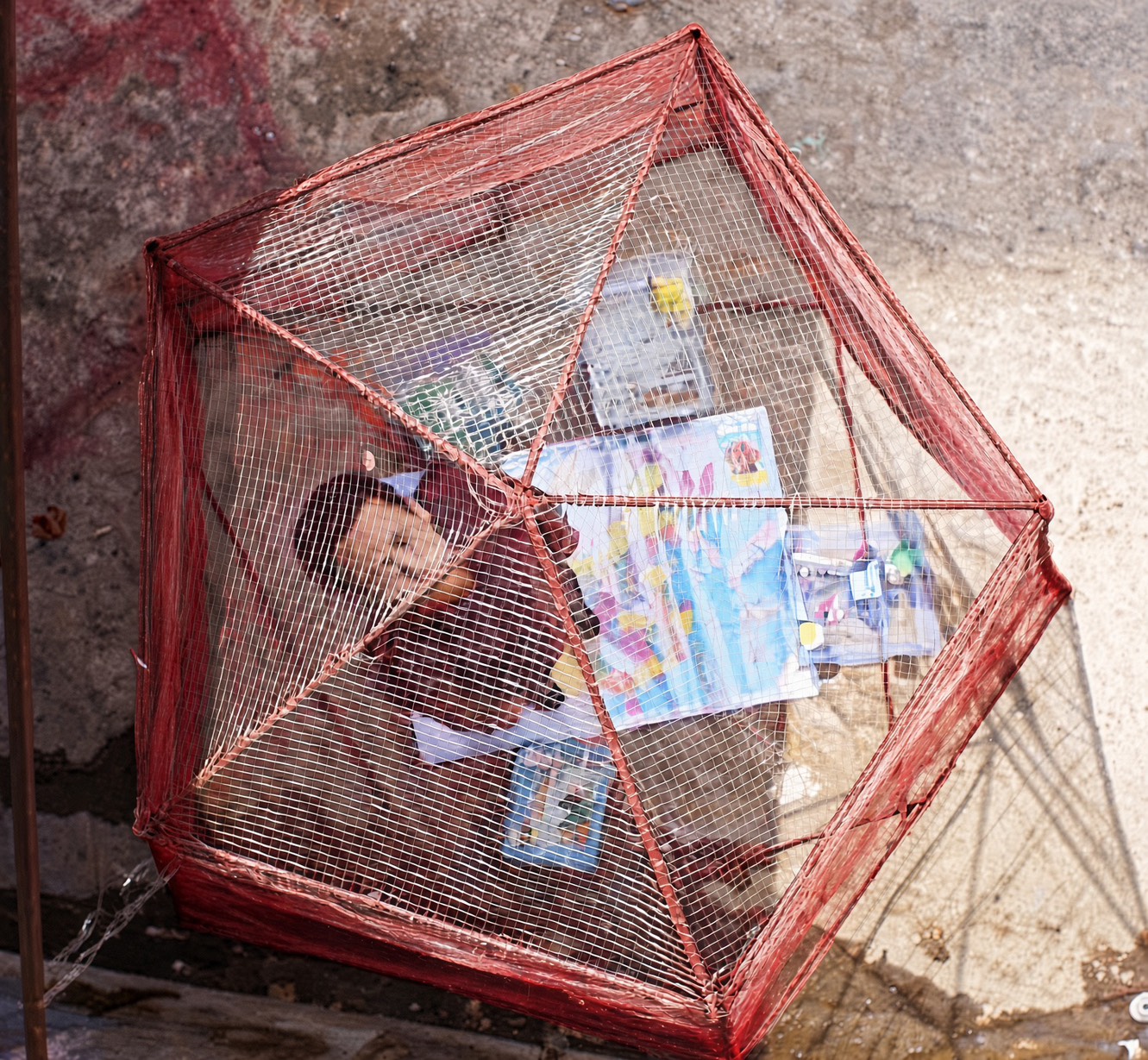
2004年,艺术家杜应红在其家乡遵义实施了一场极具颠覆性的行为艺术。他将自身锁入一个巨大的红色五星铁笼,脚踏中国地图,由一名底层板车工人拉行环绕遵义市,最终在市政府门前收尾。在21世纪初中国尚处保守与公共话语匮乏的年代,这一现场艺术以其激进的视觉符号和身体介入,完成了对国家机器、地缘历史、人权悖论及阶级结构的深度刺探。本文旨在从政治哲学、地缘社会学和行为艺术剧场等维度,对这一具有里程碑意义的跨时代作品展开系统性评述。
一、 空间政治学:“转折之城”的历史宿命与现实反讽 杜应红特意选择遵义作为这场行为艺术的发生地,在政治学与地缘历史学上具有极其深远的隐喻。 **历史节点的解构:**遵义在中国共产党的叙事中被称为“转折之城”,是政权走向成熟与胜利的起点。艺术家将身体带回这个“原点”,实质上是对权力的历史神话进行了一次逆向的追溯。 从宏大历史到个体禁锢的错位:1935年的遵义会议被宣扬为“挽救了革命,挽救了党”;而2004年的杜应红,则在同一个空间坐标内,用一个巨大的、象征政权核心符码的红色五星铁笼将自己禁锢。这种视觉冲击将宏大叙事中的“解放”与现实语境中个体的“囚禁”强行缝合,构成了极具张力的历史讽刺——所谓的历史“转折”,究竟是走向了人的彻底自由,还是走向了更深层的专制政权化禁锢?
二、 人权辩证法:“动物保护”叙事下的“人的缺席”
作品的创作灵感源于对当时中国社会意识形态演变的反思。21世纪初,随着中国融入全球化,“保护动物”等普世价值的词汇开始进入官方与主流媒体的话语体系。然而,杜应红敏锐地捕捉到了其中的人权悖论:
**生命政治的冷酷现实:**在一个连动物生命权、福利权都被拿来宣扬和作秀的社会体制下,作为社会核心主体的“人”,却在基本的政治权利、社会保障、言论自由以及法律救济上全面缺席。 **“地图”作为规训的隐喻:**在笼中,艺术家将一张中国地图踩在脚下。地图在政治学中是主权疆域、国土控制和国家意志的具象化呈现。将身体置于红色五星之下,同时践踏着地缘版图,象征着个体生命在庞大的国家规训面前既是叛逆者,又是被制度机器彻底碾压和笼络的囚徒。人在这里,成了比“受保护的动物”更低维度的、失去自主性的政治客体。
三、 阶级剧场:板车、底层工人与异化的权力关系
这件作品最具社会学穿透力的环节,在于引入了拉大木板班车的底层工人。这一主客体关系的设置,将行为艺术推向了更复杂的社会阶级批判:
**“无产阶级”的讽刺性异化:**拉板车的工人代表着中国最底层的劳动者,在马克思主义的红线叙事中,他们是“国家的主人”和“革命的先锋”。然而在现实的资本与权力结构中,他们沦为出卖绝对体力的边缘群体。 **双重禁锢的荒诞互文:**工人用汗水和体力拉着一个禁锢了知识分子/艺术家的红色铁笼在前行。笼内的艺术家在承受精神和肉体的政治反思,笼外的工人在承受现实生计的残酷剥削。这种“底层拉着精英,精英被体制囚禁”的流动景观,精妙地勾勒出20世纪末至21世纪初中国社会阶层流动的凝固与异化。环绕遵义市一圈的过程,犹如一场流动的政治审判剧场,向围观的公众和最终的终点——市政府,抛出了最刺骨的追问。
四、 结语:2004年的先锋回响与跨时代价值
在2004年那个经济刚开始腾飞、思想依然处于保守与贫困交织的年代,杜应红的这场行为艺术无疑是一次惊世骇俗的政治学探险。它不仅超越了当时国内艺术界流于表面或视觉猎奇的“身体自残式”行为,直接直奔人权、体制与地缘政治的核心。
通过将自己置于红笼之中,杜应红完成了一次对极权美学和生存状态的预言式书写。20年后的今天,当我们重新审视这一影像与历史记录,会发现它不仅没有过时,反而随着时代在权力、监控与个人自由层面的收紧,显露出更具悲剧色彩的现实洞察力。它不仅是遵义这座城市的一枚历史刺针,更是中国当代先锋艺术史上的一座关于人权捍卫与政治批判的坐标。
Imprisonment in the Red Cage and the Turning Point of Geopolitics: A Political Critique of Du Yinghong’s 2004 Zunyi Performance Art
In 2004, artist Du Yinghong executed a deeply subversive performance art piece in his hometown of Zunyi. Locking himself inside a massive red iron cage shaped like a five-pointed star, with a map of China under his feet, he was pulled around the city of Zunyi by a grassroots cart laborer, concluding the performance right in front of the municipal government building. In the early 2000s, an era when China was still socially conservative and lacked public civic discourse, this live-action intervention weaponized radical visual symbols and physical presence to interrogate the state apparatus, geopolitical history, human rights paradoxes, and class structures. This commentary provides a systematic evaluation of this milestone, cross-generational piece through the lenses of political philosophy, geopolitical sociology, and the theater of performance art.
I. Spatial Politics: The Historical Destiny and Real-World Irony of the “City of Turning Points”
Du Yinghong intentionally chose Zunyi as the stage for this performance art piece, an intervention carrying profound implications in political science and geopolitical history.
The Deconstruction of a Historic Nexus: In the official narrative of the Chinese Communist Party, Zunyi is heralded as the “City of Turning Points”—the foundational birthplace where the regime matured and turned toward eventual victory. By bringing his body back to this historical “origin,” the artist effectively performed a reverse tracing of the myth of power.
The Dislocation Between Grand History and Individual Confinement: The Zunyi Conference of 1935 is glorified as having “saved the revolution and saved the Party.” Yet in 2004, within the exact same spatial coordinates, Du Yinghong used a** massive, red, five-pointed star iron cage**—the core iconographic code of the regime—to lock his own body away. This visual collision crudely sutured the concept of “liberation” found in grand narratives with the reality of individual “imprisonment,” forging a potent historical irony: did this historic “turning point” ultimately lead to the absolute freedom of the individual, or did it deliver mankind into a more deeply institutionalized confinement?
II. The Human Rights Paradox: “The Absence of Man” Under the Mask of “Animal Protection”
The conceptual inspiration for this artwork stemmed from a direct reflection on the evolution of ideological discourse in Chinese society at the time. In the early 2000s, as China integrated into the global economy, universalist lexicon like “animal protection” began surfacing in official media and mainstream propaganda. However, Du Yinghong astutely captured the glaring human rights paradox embedded within this shift:
The Cold Reality of Biopolitics: In a sociopolitical system where animal rights and welfare could be performatively paraded for public relations, the human being—the very core subject of society—remained completely starved of fundamental political rights, social security, freedom of expression, and legal recourse.
The “Map” as a Metaphor for Discipline: Inside the cage, the artist trampled a map of China beneath his feet. In political science, a map is the physical manifestation of sovereign territory, border control, and state will. By placing the physical body beneath the red five-pointed star while simultaneously treading upon the geopolitical boundaries, the piece symbolizes how an individual life stands before a titanic state apparatus: simultaneously a rebel and a captive crushed by institutional machinery. Man, in this context, is relegated to a political object stripped of autonomy, existing at a dimension lower even than that of a “protected animal.”
III. The Theater of Class: Carts, Grassroots Labor, and Alienated Power Dynamics
The most socio-analytically piercing aspect of this work lies in** the introduction of the grassroots cart laborer pulling the heavy wooden flatbed**. This specific alignment of subject and object elevated the performance into a complex critique of social stratification:
The Satirical Alienation of the “Proletariat”: The cart laborer represents the lowest tier of Chinese working-class society. In orthodox Marxist theory, they are celebrated as the “masters of the nation” and the “vanguard of the revolution.” Yet within the actual economic and power structures of modern capital, they are marginalized, reduced to selling raw physical labor for survival.
The Absurd Intertextuality of Dual Imprisonment: A laborer uses his sweat and muscle to pull a red iron cage containing an intellectual/artist through the streets. The artist inside undergoes a mental and physical reckoning with political confinement, while the laborer outside endures the brutal economic exploitation of daily survival. This kinetic landscape of “the marginalized pulling the elite, while the elite is caged by the system” brilliantly maps out the rigid, alienated reality of class mobility in China at the turn of the century. The journey around Zunyi functioned as a rolling theater of political trial, hurling raw, unsettling questions at the onlookers along the way and at its final destination—the municipal government.
IV. Conclusion: Avant-Garde Echoes of 2004 and Cross-Temporal Value
In 2004, during an era when economic growth was just beginning to accelerate while public thought remained bound by a mixture of conservatism and poverty, Du Yinghong’s performance was undeniably a startling political exploration. It bypassed the mainstream domestic performance art trends of the time, which often relied on superficial, shock-value physical self-mutilation, and marched straight into the heart of human rights, institutional critique, and geopolitics.
By placing himself inside the red cage, Du Yinghong composed a prophetic text on totalitarian aesthetics and existential survival. Looking back at these photographic and historical records over two decades later, the piece has not lost its edge. Instead, as contemporary society experiences tightening grips around power, surveillance, and personal autonomy, the work manifests an even more tragic, clairvoyant insight. It stands not merely as a historic thorn in the side of Zunyi, but as a towering coordinate of human rights defense and political critique in the history of Chinese contemporary avant-garde art.
评论
加载评论中…