On the Discipline and Deconstruction of Public Power by Art: A Textual Interpretation and Civilizational Significance of Du Yinghong’s Performance Art Work The Emperor of Shenzhen
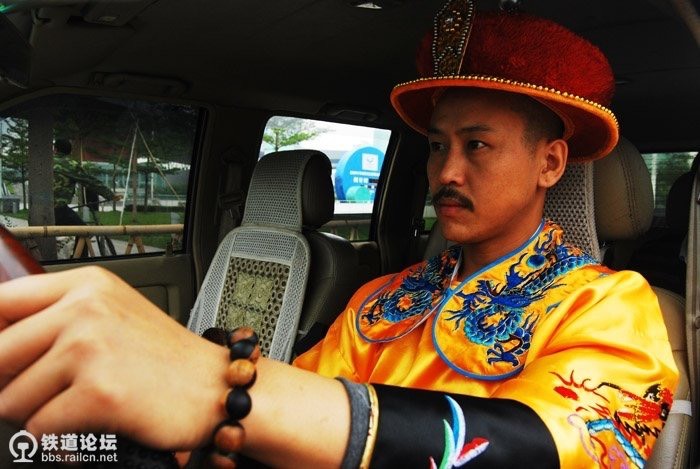
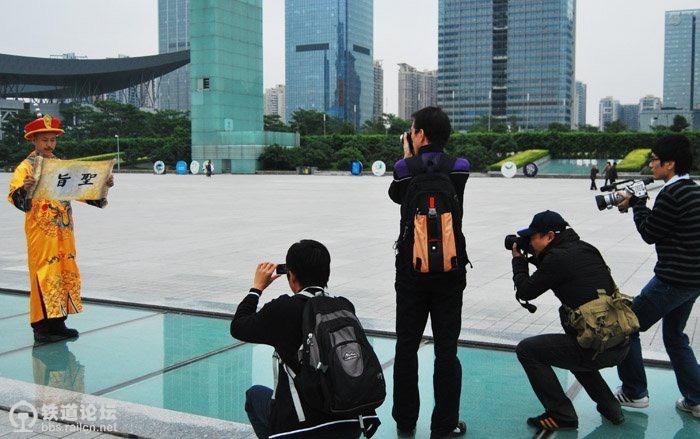
In November 2009, artist Du Yinghong executed a landmark performance art piece titled The Emperor of Shenzhen Proclaims 14 Regulations on Abnormal Petitioning at the Shenzhen Citizen Center Square. This work was a direct response to the “14 Classifications of Abnormal Petitioning Behaviors” jointly promulgated by multiple local governmental authorities in Shenzhen. By employing the visual symbols of pre-modern absolute imperial power, the artist achieved a high-tension irony and comprehensive deconstruction of a draconian “special economic zone law” enacted beyond the local government’s legal authority. The work triggered a massive domestic and international media sensation within days, eventually forcing the local government to make a rare withdrawal of the administrative notice. This paper aims to provide a critical legal and sociological interpretation of the official 14 punitive clauses and explore the deep civilizational value of this work as a world-class paradigm of “artistic intervention in public administration.”
 Deconstruction of the Historical Text: A Critical Legal Analysis of the Official “14 Punitive Clauses on Abnormal Petitioning”
In early November 2009, the Shenzhen Intermediate People’s Court, the Procuratorate, the Public Security Bureau, and the Justice Bureau jointly issued the Notice on Handling Abnormal Petitioning Behaviors in Accordance with the Law. The core strategy of this document was to arbitrarily criminalize citizens’ legitimate rights to petition and seek administrative remedy by casting an overly broad legal dragnet. A thorough reading of these 14 behavior definitions reveals irreconcilable institutional fallacies and legal regressions when measured against jurisprudence, constitutional spirit, and modern governance logic:
Clause 1: Petitioning through “abnormal channels” in politically sensitive areas in Beijing, such as Zhongnanhai, Tiananmen Square, Xinhua Gate, or foreign embassies and consulates. **Clause 2: **“Bypassing immediate authorities” to petition in provincial party committees, provincial government compounds, or other politically sensitive areas within the province. Clause 3: Gathering, loitering, or causing a disturbance without approval at the Shenzhen Municipal Party Committee, Citizen Center, Convention and Exhibition Center, or other state organs and major event venues. **Critical Interpretation: **Modern democratic architecture (such as the Shenzhen Citizen Center) is fundamentally designed to be a receptacle for the public will. The essence of these three clauses is the exclusivist reconstruction of political space. It attempted to transform core state organs into unapproachable “zones of power” via administrative barriers. By erasing the visibility of social contradictions, it stripped vulnerable groups of the opportunity to express political grievances within highly visible spaces that are most capable of capturing public attention.
The Criminalization and Humiliation of Civilian Protest Rituals (Clauses 4, 5, and 11) **Clause 4: **Shouting slogans, displaying banners or placards, wearing petition robes (Grievance Clothing), presenting written petitions, or distributing petition materials. Clause 5: Staging sit-ins, blockading venues, or obstructing state organ personnel from performing their official duties in public places. Clause 11: Persisting in making ungrounded trouble or boundlessly pestering authorities after a petition matter has been legally accepted, processed, or officially concluded.
Critical Interpretation: “Wearing petition robes and holding up banners” are classic non-violent rituals in Eastern cultural narratives through which the weak appeal to power for justice. In the context of modern rule of law, these actions fall squarely within the scope of freedom of speech and the right to petition guaranteed by the Constitution. Directly defining these symbolic protest rituals as illegal or criminal acts and imposing severe penalties constitutes a gross deprivation of citizens’ defensive civil rights, demonstrating a total crushing of humanism by instrumental rationality.
** Inversion of Accountability and Moral Apathy in Extreme Protest Events (Clauses 6 and 9)**
Clause 6: Employing extreme or self-harming behavior, such as staging “suicide jumps” or self-mutilation to apply pressure through petitioning. Clause 9: Abandoning the elderly, weak, sick, disabled, patients with infectious diseases, or individuals incapable of self-care at petition reception venues. Critical Interpretation: No rational human being would leverage their own life or the survival of loved ones as a bargaining chip unless driven to absolute despair. Instead of reflecting on the underlying judicial injustices or the failure of systemic remedies that trigger such extreme behaviors, the notice weaponized “self-harm” and “abandonment”—the final, desperate cries of the vulnerable—as evidence to aggravate criminal punishment. This is not only a fundamental inversion of legal logic (punishing the cause via the effect) but also a complete collapse of moral empathy by administrative power when confronting deep social wounds. ** The Stigmatization of Collective Action and Illegitimate Generalization of Punitive Thresholds (Clauses 7, 8, 10, 12, 13, and 14)**
Clause 7: Intercepting motor vehicles, illegally forcing entry onto public transport, or blocking road traffic. Clause 8: Assaulting, insulting, or harassing government personnel, or intentionally destroying public or private property Clause 10: Organizing, instigating, planning, or linking up group-based abnormal petitions as a primary ringleader or major participant. Clause 12: Intentionally creating incidents or escalating the scale of petitions during major national holidays, important conferences, or significant events. Clause 13: Fabricating facts, concocting lies, or engaging in malicious hype and false accusations through the internet or other media platforms. Clause 14: Catch-all clause covering other illegal means that disrupt the normal work order of state organs or sabotage public security.粗体文字 Critical Interpretation: These clauses (particularly the stigmatization of organizing in Clause 10 and the catch-all nature of Clause 14) attempted to isolate atomized individuals before the colossal machinery of the state by pathologizing collective advocacy. More severely, this notice violated the Legislation Law of the People’s Republic of China of that era. Jurisprudential principles dictate that punitive measures restricting personal freedom (such as “Labor Re-education” (Laojiao) and administrative detention explicitly proposed in the notice) must be established solely through laws enacted by the National People’s Congress or its Standing Committee. The illegal notice jointly issued by the four local departments in Shenzhen represents a classic and severe administrative encroachment upon national legislative sovereignty.
Mirror and Irony: The Artistic Deconstruction Mechanism of Du Yinghong’s The Emperor of Shenzhen
Confronted with such an absurd and heavily authoritarian local regulation, artist Du Yinghong bypassed rigid, direct confrontation—which would have been swiftly swallowed and neutralized by the state machinery. Instead, he deployed avant-garde artistic methodologies: “Over-identification” (subversive compliance) and “magical realist mirroring.”
Spatiotemporal Dislocation and Semiotic Intertextuality: Exposing the “Pre-Modern” Essence of Power
In the performance, Du Yinghong donned a bright yellow imperial dragon robe, placed a crown upon his head, and held a golden imperial decree. He stood directly in front of the Shenzhen Citizen Center, a building featuring highly futuristic, deconstructivist architecture. This visual landscape formed a high-intensity semiotic intertextuality: The Shenzhen Citizen Center symbolized the absolute forefront of China’s reform, opening up, and the democratic window of modern urban governance; conversely, the dragon robe and imperial decree symbolized absolute monarchy and a rigid feudal hierarchy that resisted modernization for millennia.
When the “Emperor” stood before the modern municipal square and read out the “14 regulations” verbatim, the absurd dramatic tension reached its zenith. The artist utilized visual language to expose a grim reality to the public: this “14-clause” regulation, concocted by modern technocrats without public hearings, shared an identical core with the “imperial edicts” of a feudal despot. By utilizing pre-modern visual symbols, he stripped away the facade of modern administrative legitimacy.
Non-Violent Compliance: Achieving “Total Subversion” Through “Extreme Obedience”
The brilliance of The Emperor of Shenzhen lay in the artistic camouflage of its political maneuvering. Had the artist held a conventional protest banner, he would have been instantly detained for “illegal assembly” or “picking quarrels and provoking trouble.” Instead, Du Yinghong stood on the exact same side as the authorities: “Since you have promulgated such regulations, I shall act as the most loyal subject and grandly proclaim them on behalf of the Emperor.”
This strategy of “over-compliance” completely paralyzed the immediate on-site enforcement apparatus. The security and police forces could not easily criminalize an artistic performance that was textually “publicizing and popularizing a government document.” This tai-chi style of soft political maneuvering carved out an absurd artistic sanctuary, buying vital time for the performance to endure on-site and subsequently explode across various media platforms.
Civilizational Horizon: A Epoch-Making Paradigm of Artistic Intervention in Public AdministrationThroughout Western art history, from Joseph Beuys’ concept of “Social Sculpture” to Hans Haacke’s institutional critique, artists have long strived to alter society through creative practices. However, most of these endeavors remained confined within the white walls of art institutions or were eventually co-opted and dissolved by institutional capitalism. Du Yinghong’s The Emperor of Shenzhen broke through this limitation, achieving a tangible, historic piece of social engineering, rendering it a pinnacle achievement of artistic intervention in public administration.
**Substantive Policy Intervention: The Physical Disciplining of Public Power by Art **
The most profound value of The Emperor of Shenzhen lies in its consequentialist outcome. It was not merely an aesthetic shockwave; it physically reshaped public policy. Following consecutive, in-depth reports by Phoenix Television, Xinhua News Agency, and various international media outlets—spurring a massive wave of internet public opinion—the Shenzhen government bowed to immense reputational pressure and swiftly withdrew the regulation. This shattered the fatalistic narrative that “art is politically impotent.” Within a matter of days, a singular work of art successfully shielded millions of citizens in a major metropolis from having their legal rights to petition and personal freedom infringed upon by an unjust decree. It directly intervened in and reversed a high-level municipal executive decision.
**Non-Violent Correction of Civil Society: A Peaceful Template for Institutional Reform **
In the evolution of human civilization, the resolution of systemic social contradictions often carries the scars of violent confrontation and societal tearing. Du Yinghong’s practice offered a highly intellectual, low-cost, and non-violent template for social rectification. By utilizing humor, irony, and aesthetic spectacles, he transformed a political crisis that could have easily escalated into a physical conflict into a collective public discourse on the “true meaning of the rule of law.” It demonstrated to modern urban administrators that civic engagement is not limited to blind obedience or violent rebellion; it can manifest as highly intelligent scrutiny and creative discipline.
The Media Lever of the Spectacle: Artistic Practice as an Amplification Engine
The work fully activated what Guy Debord termed the characteristics of the “Society of the Spectacle.” In an information-saturated modern society, dry legalistic lectures often fail to awaken a desensitized public. Du Yinghong successfully leveraged the mass media apparatus through the highly shocking “artistic spectacle” of an emperor proclaiming an edict. This enabled the sheer absurdity of the 14 regulations to cross specialized legal barriers, mutating into a household topic and gathering an overwhelming wave of moral and public pressure.
Transcendence in Art History: Moving From “Reflecting Reality” to “Creating Reality”
Karl Marx once noted: “Philosophers have only interpreted the world in various ways; the point, however, is to change it.” The Emperor of Shenzhen completely manifested this philosophical axiom within the realm of contemporary art. It transcended traditional art’s role of mimicking, criticizing, or documenting reality; at that specific moment, art became a direct instrument for producing institutional justice. The artwork was only truly completed at the exact moment the decree was rescinded and history was rewritten. It not only secured a permanent place in contemporary art history but also left a classic precedent in the history of human political civilization for disciplining executive power through cultural creativity.
Du Yinghong’s The Emperor of Shenzhen captures a peak historical confrontation where contemporary art, mass media, civic legal consciousness, and modern governance intersected within a shared public space. Clothed in an absurd imperial dragon robe, the performance fiercely protected the dignity of modern constitutionalism. In the grand discourse of how art intervenes in society and steers human political civilization toward openness, transparency, and maturity, The Emperor of Shenzhen stands as an enduring lighthouse, demonstrating the boundless potential of creative intelligence and moral courage.
评论
加载评论中…