Mapping the Geopolitical Psyche: A Critique of Du Yinghong’s The Golden Hoop National Tour
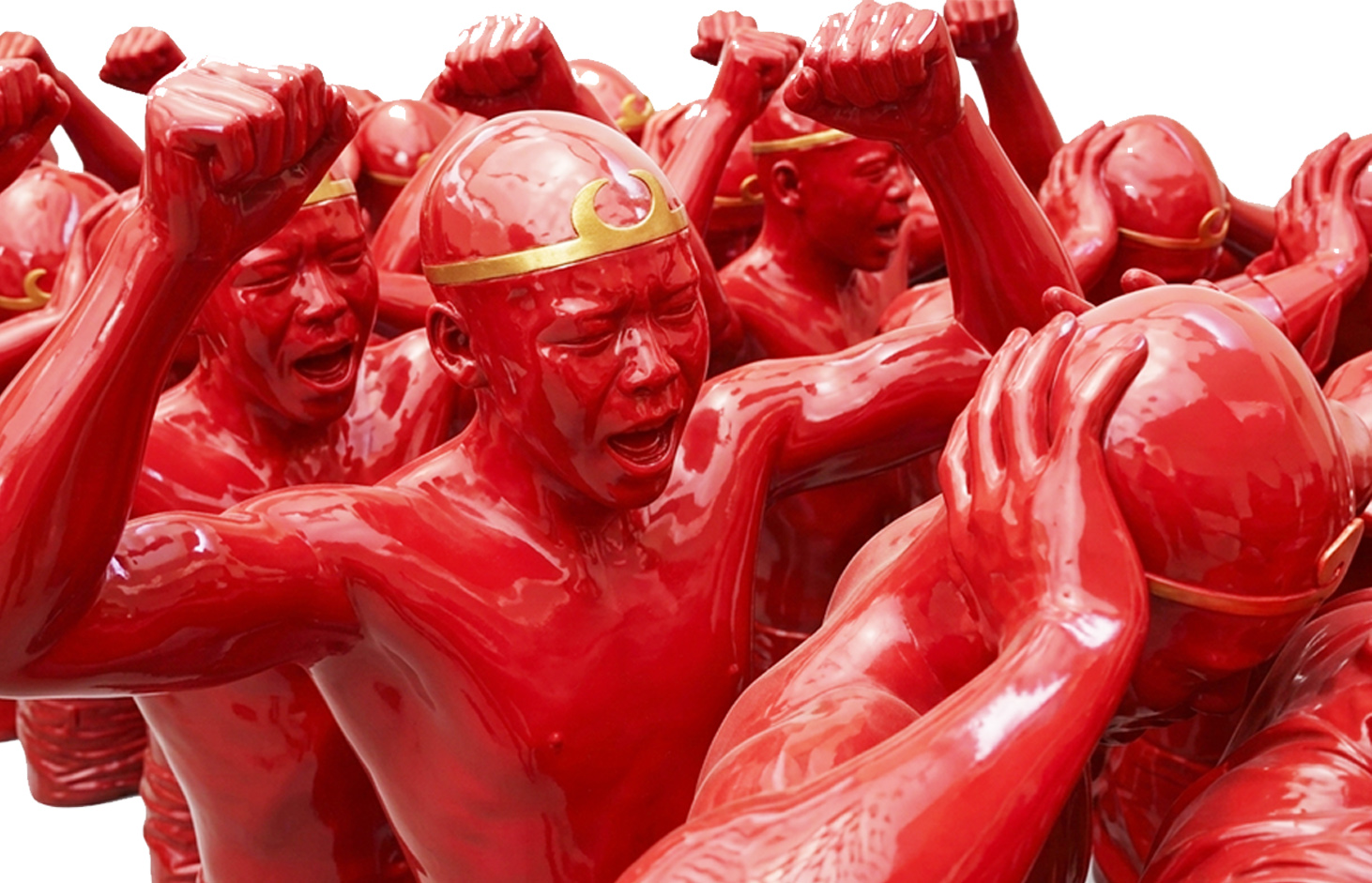
Du Yinghong’s nationwide tour of The Golden Hoop (Jin Gu Zhou) in the early 21st century stands as a highly provocative, localized, and public mapping of the geopolitical psyche in the history of contemporary Chinese art. Staged within the specific historical conjuncture of the post-2008 Beijing Olympics—a moment when national narratives and the “China Wave” reached their absolute zenith—Du carved out a social conduit that thrust elite aesthetics directly into the bedrock of grassroots reality through an almost desolate mode of “somatic nomadism.”
 To dissect the academic value of this performance piece in depth, one must position it within a conceptual lineage that runs from the origins of the Western avant-garde (Marcel Duchamp, Joseph Beuys) to the institutional shifts of local Chinese art, establishing a rigorous comparative critique.
Marcel Duchamp established the concept of the “Ready-made” through Fountain (the urinal). Its core logic rested on “transplanting everyday objects into the art museum.” By leveraging the physical walls of the institution, Duchamp stripped the object of its utilitarian function, thereby consecrating it with a sacred artistic concept—an inward-looking critique of the institution.
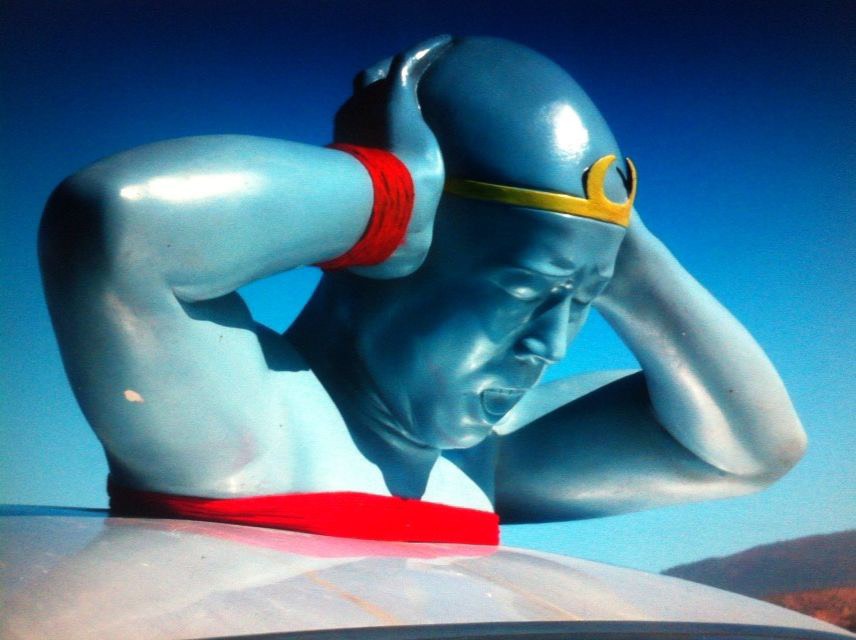
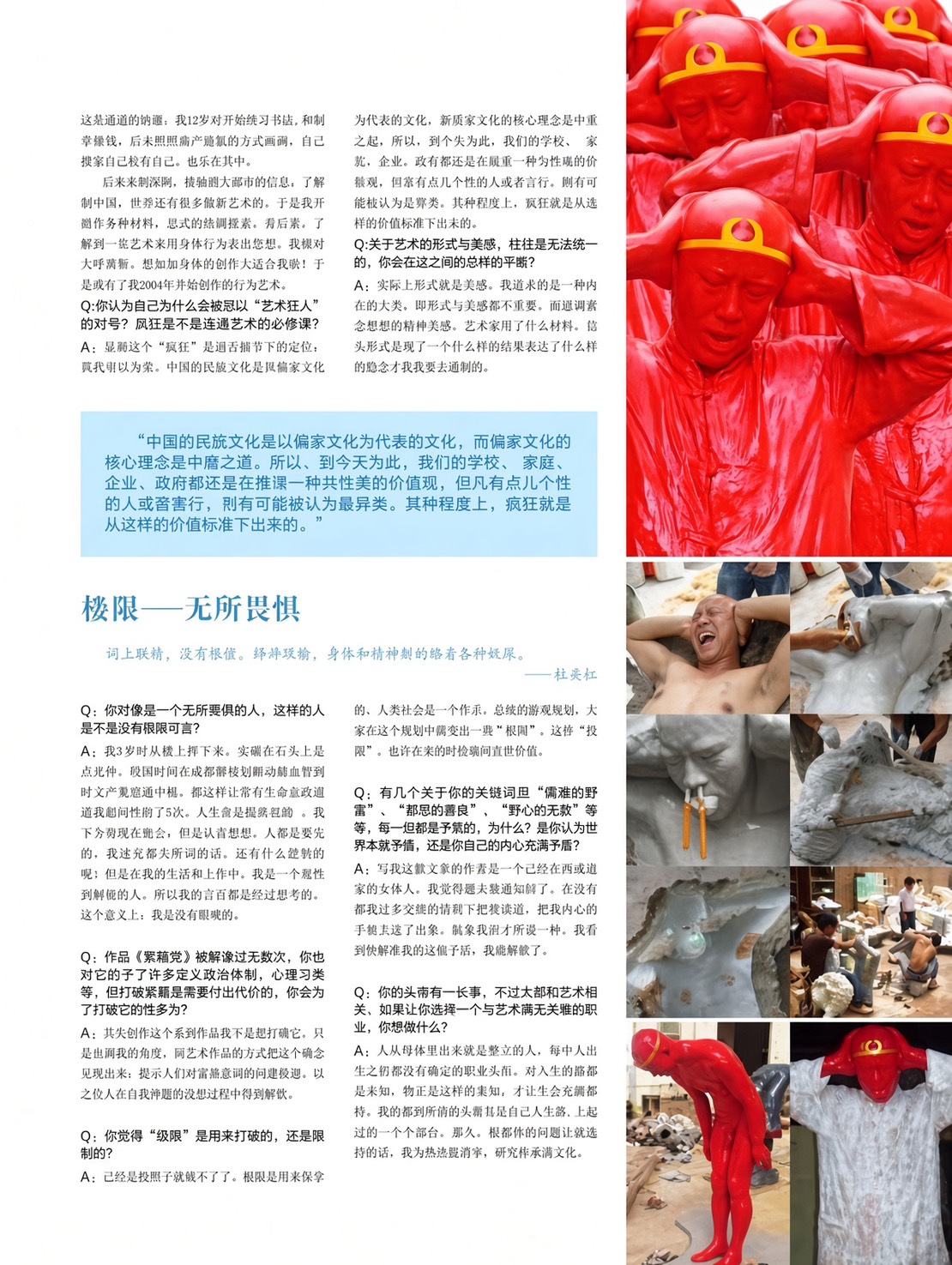
Du Yinghong’s Breakthrough: Reverse Institutionalization Du completely upends Duchamp’s trajectory of “entering the museum.” Instead, he executes a reverse operation—transforming the “sculpture,” which inherently belongs to the elite discourse of the museum, into a “ready-made,” and then violently “expelling it from the museum.” He mounted it onto an off-road vehicle—a tool heavy with industrial and middle-class nomadic metaphors.
While Duchamp’s ready-mades relied on the legitimacy of the museum institution to achieve their irony, Du’s The Golden Hoop tour demonstrates that in the contemporary context, the museum has become a breeding ground for institutional complicity. Art can only reactivate its critical edge by being restored as a “heterogeneous signifier” on the social highway. This marks a media breakthrough from the “appropriation of the ready-made” to the “ready-made-ization of the artwork.”
 Joseph Beuys proposed the theory of “Social Sculpture” and the dictum “everyone is an artist,” arguing that art should serve as a fluid force to reshape political and social structures. His performances—such as How to Explain Pictures to a Dead Hare or 7000 Oaks—relied heavily on mythic metaphors, shamanic mysticism, and a grand, utopian vision of social healing.
Du Yinghong’s Breakthrough: Demythologized “Gritty Realism” and Spatial MobilityBeuys’s social sculpture, to a large extent, retained the didactic posture of the European intellectual elite. In contrast, Du’s tour strips away romantic utopian fantasies, presenting a profound sense of gritty realism and localized poignancy.
Rather than engaging in civilized dialogues within well-established European public squares, Du drove his off-road vehicle across China’s complex geographical tiers—navigating physically from the hyper-capitalized metropolis of Shenzhen through old industrial rustbelts, remote southwestern hinterlands, and into the Central Plains and revolutionary base areas. Throughout this journey spanning tens of thousands of kilometers, the bust of The Golden Hoop functioned as a mobile social voltmeter. The interceptions, spectatorship, confusion, and interactions of various social strata along the way (traffic police, villagers, local officials, and pedestrians) collectively shaped the “dynamic modeling process” of this social sculpture. This broke away from Beuys’s relatively static, localized social experiments, maximizing both spatial scale and class stratification.
 **While the contexts of Duchamp and Beuys were purely Western (Dadaism and postwar German introspection), Du Yinghong’s success lies in the absolute localization of his semiotic weaponry.
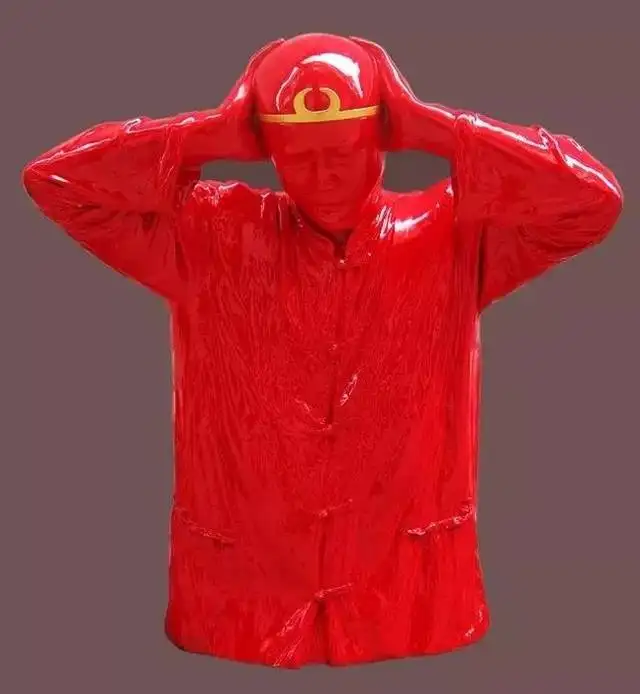
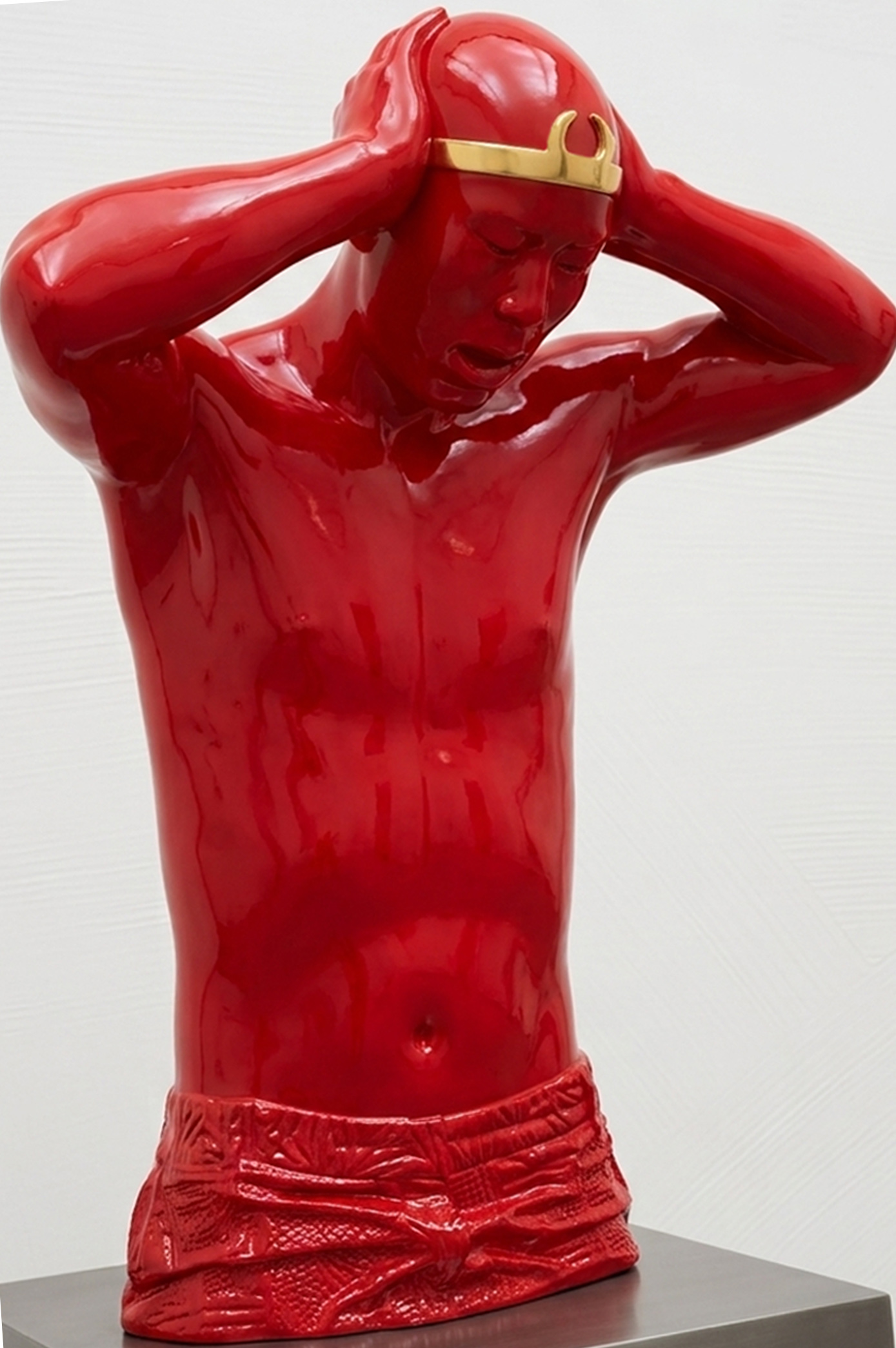
An Intertextuality of Anti-Institutional Mythology:** “The Golden Hoop” originates from the indigenous Chinese myth Journey to the West, serving as the ultimate metaphor for “the domestication of freedom by authority” and “the imposition of institutional legitimacy over individual will.” Du reifies this into a bust charged with intense psychological oppression and sacred martyrdom, directly counter-mapping the “collectivist pageantry” sweeping the nation under the Olympic tide.
The Alienation and Awakening of Individual Divinity: When this red or gray human signifier, bound by the golden hoop, materialized on highways, at gas stations, in village squares, and before ruins across various provinces, it generated a powerful Alienation Effect. It acted as a mirror, reflecting the true portrait of everyday individuals who, swallowed by the fervor of a prosperous era, bore the brunt of existential burdens and invisible spiritual confinement in their lived realities.
In terms of expanding the boundaries of artistic media, Du’s performance was remarkably prescient:
Traditional public art (such as urban sculpture) exists as a static ornament heavily disciplined by state power or capital. Du transformed public sculpture into a guerrilla medium of “mobile warfare.” The off-road vehicle was no longer a mere mode of transport; it became a dynamic exhibition space—a blade cutting through a stagnant ideological landscape.
Touring through Shenzhen, Guangdong, Guangxi, Yunnan, Guizhou, Sichuan, Chongqing, Gansu, Shaanxi, Shanxi, Hubei, Hunan, and Jiangxi, the exhibition generated massive social ripples. This resonance was preserved not only through the spectatorship records of traditional print media (such as the Southern Metropolis Daily), but more importantly, through the ripples it sent through online forums and grassroots oral histories. The encounters, conflicts, compromises, and dialogues along the way constitute a precious phenomenological archive of the ecology of grassroots Chinese society around 2009.
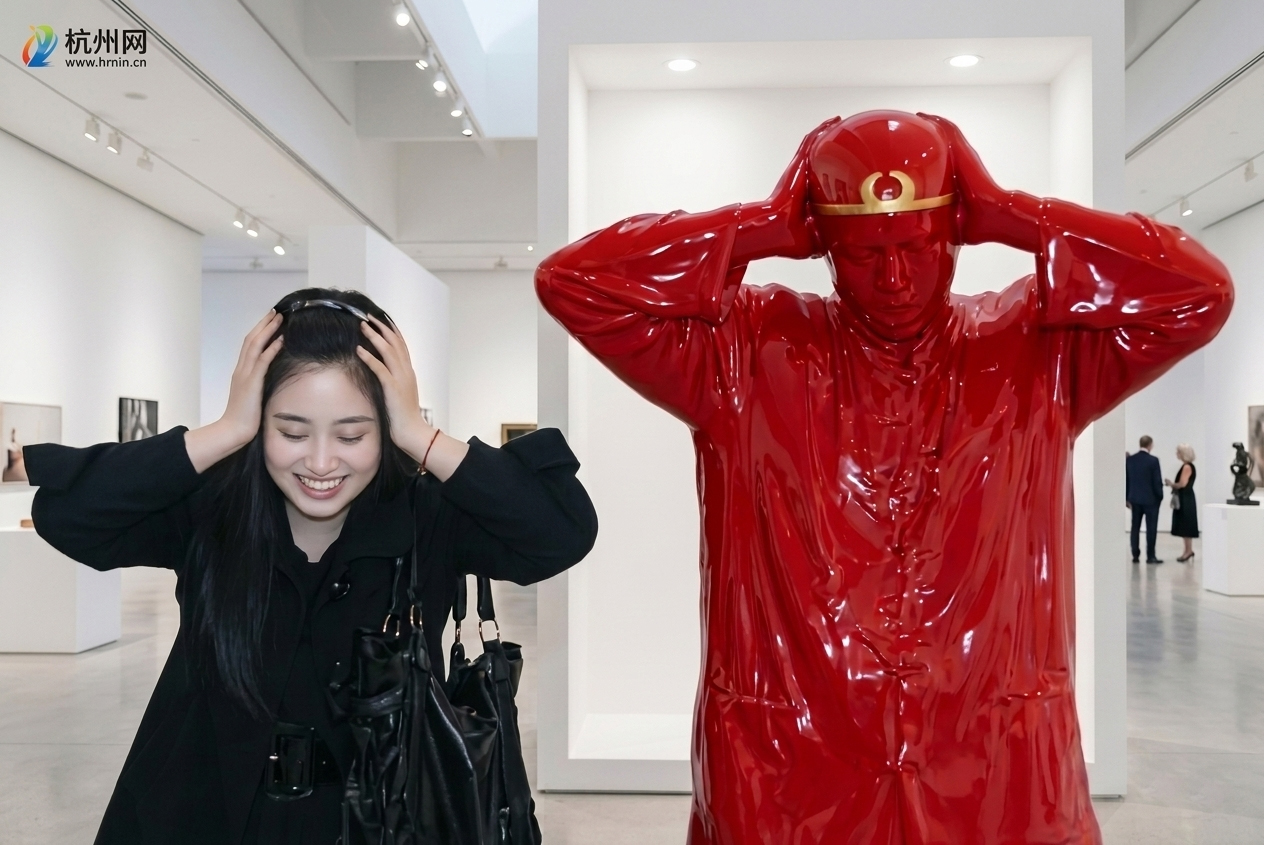 Du Yinghong’s national tour of The Golden Hoop was not merely an extraordinary artistic solo performance, but a profound social diagnosis. He bypassed Duchamp’s inward-facing semantic deconstruction of the art institution, while correcting the overly idealized, utopian tendencies of Beuys’s social sculpture. By doing so, he forcefully hammered the criticality of avant-garde art into the soil of Chinese geopolitics and grassroots reality. Against the grand narrative of Olympic fanaticism, he used a mobile track stretching tens of thousands of kilometers to sketch a colossal, chilling question mark over that era—lonely, yet absolute.
评论
加载评论中…