Spatial Reconstruction and the "Artistic Perpetuation" of Collective Memory After the Tempest
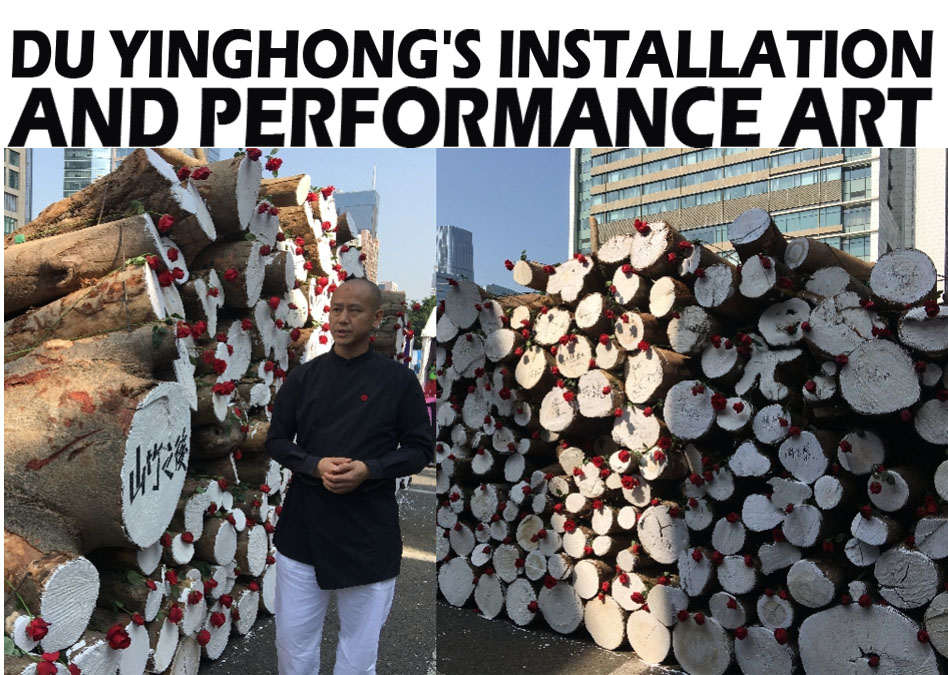
—— A Review of Du Yinghong’s Large-Scale Public Installation Sculpture:* After Typhoon Mangkhut · Rebirth*
In the contemporary art landscape, which is increasingly confined to niche circles and overly reliant on obscure conceptual interpretations, the works of artist Du Yinghong have consistently maintained a gripping sense of presence and social intervention that pierces through the ivory tower. In September 2018, Super Typhoon Mangkhut swept through Shenzhen with devastating force. The resulting uprooted trees and scattered branches across the city left an indelible mark of collective trauma on this rapidly expanding metropolis. While the city’s administrative machinery operated at full throttle to clear the debris and restore daily order, Du Yinghong chose not to retreat to his studio for meticulous, text-driven creations. Instead, he paused and turned his gaze toward the fractured timber of Wutong Mountain, broken by the gale. Ultimately, these 20 tons of wreckage, which were originally bound for landfills, were infused with a new lease of life through the artist’s direct action, transforming into the massive public installation sculpture After Typhoon Mangkhut · Rebirth.
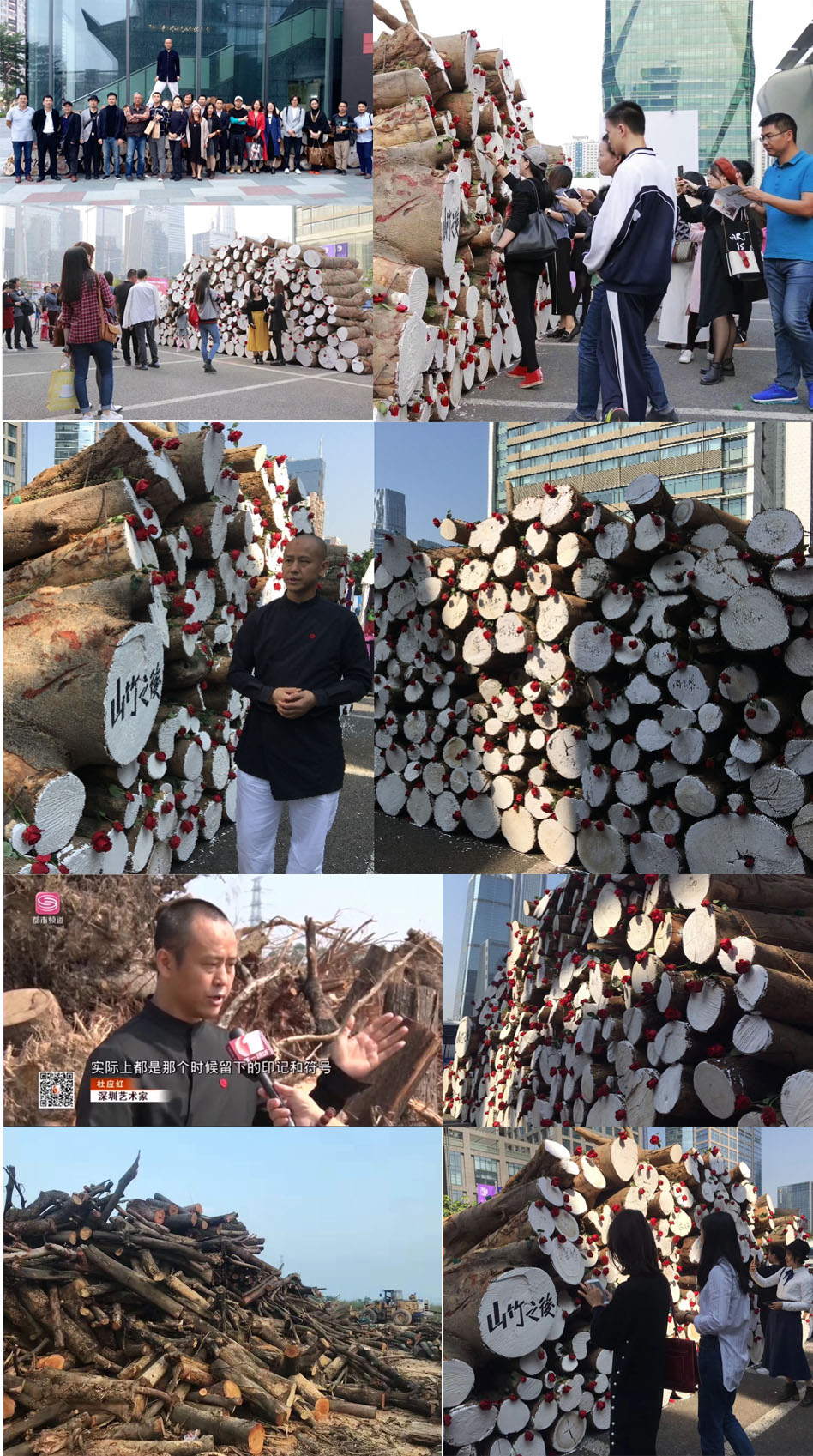 This masterpiece is not merely a visual freeze-frame of disaster memory; it represents a concentrated explosion of Du Yinghong’s long-standing creative philosophies: “artistic intervention in society” and the “dismantling of artistic elitism.”
Du Yinghong’s artistic creation has always possessed a strong sense of field actionism and an anti-refinement stance. He has explicitly advocated that art should break away from pure aesthetic games and directly confront the coarse, raw realities of existence.
Material Authenticity: The uniqueness of After Typhoon Mangkhut · Rebirth was predestined by its very origin. It was not elaborately sculpted in a studio out of brand-new materials, but grew organically right out of the disaster scene.
Preservation of Force: The tree trunks, bearing jagged tears and retaining their natural fracture lines, were themselves deeply etched with the violent power of the typhoon. Du Yinghong refrained from any redundant aesthetic touch-ups or structural alterations, completely respecting the physical state of the fractured wood.
The Weight of Mass: By stacking 20 tons of raw timber in a visually striking configuration, he thrust the raw might and destructive power of nature directly in front of the audience without any buffer.
This approach—approaching a “zero-degree treatment” of materials—inherits his previous practice of capturing reality through raw mediums. To him, art does not need to embellish a disaster; the skeletal remains left in its wake are already the most eloquent language.
In Du Yinghong’s philosophy of art, “demystification” and the public principle that “everyone is an artist” occupy a central position. He remains highly vigilant against art becoming a symbolic game monopolized by a privileged few, striving instead to return the right of interpretation to the masses.
In After Typhoon Mangkhut · Rebirth, he incorporated a highly intelligent artistic omission: the cross-sections of the logs were painted white, leaving empty spaces for passersby to freely sign their names and leave messages.
Through this continuous displacement of space and deep civic participation, Du Yinghong successfully transformed a personal artistic intervention into a sociological practice of mass co-creation.
Shenzhen is a miracle city renowned for its “rapid iteration.” Here, traces of the old are swiftly covered by new buildings and pristine landscapes in a remarkably short time. Efficiency flattens trauma, but it also easily erases reflection.
With this 20-ton “monument of memory,” Du Yinghong firmly pressed a brief pause button on the racing wheels of the city:
Resisting Oblivion: Standing permanently in Wutong Mountain, this piece serves as a silent reminder to everyone who stands before it. It asks them not to forget the nights spent behind tightly shuttered windows, the moments of mutual aid on the streets clearing branches after the storm, and the profound emotion of watching fallen trees sprout new buds.
Reshaping the Human-Earth Relationship: The word “Rebirth” in the title does not merely signify that these discarded logs achieved immortality through an artistic medium. It points to a “spiritual rebirth” regarding how humanity positions itself. It avoids empty slogans about “respecting nature,” using the silent presence of the timber to declare: Humanity is never the master of nature, but a fragile entity coexisting with it.
In a sense, Du Yinghong’s After Typhoon Mangkhut · Rebirth has long transcended the material boundaries of ordinary installation art. It is an artistic campaign taking place in the public urban sphere, an archive of urban memory written in wood, and a profound environmental education open to all citizens.
He used the coarsest fractured wood to deliver the gentlest healing, and adopted the most open posture to construct the sturdiest collective identity. This piece not only proves the capability of art to be fully present during a crisis, but also fulfills Du Yinghong’s enduring artistic ideal—to let art truly take root in the soil, becoming a medium for deep connection between humans, and between humanity and nature. As time washes over the sculpture, the names written on the wood may fade, but the awakened memories of reverence and rebirth will endure alongside Wutong Mountain, remaining a priceless spiritual asset of Shenzhen.
评论
加载评论中…